
Phase 2: Global Data Collection
Global HSR Innovation Project
Unpacking the "Black Box" of High-Speed Rail, Weak Ties, and Regional Innovation
Contact the PI
Unpacking the "Black Box" of High-Speed Rail, Weak Ties, and Regional Innovation
Contact the PIThe global expansion of High-Speed Rail (HSR) represents a profound sociotechnical transformation, reshaping not just how we move, but how we collaborate. While traditional engineering focuses on reducing travel time, HSR is increasingly framed by policymakers as a catalyst for regional innovation.
Coordinated by the Public Transport Research Group (PTRG):

Providing strategic guidance to ensure policy relevance for the Australian context.
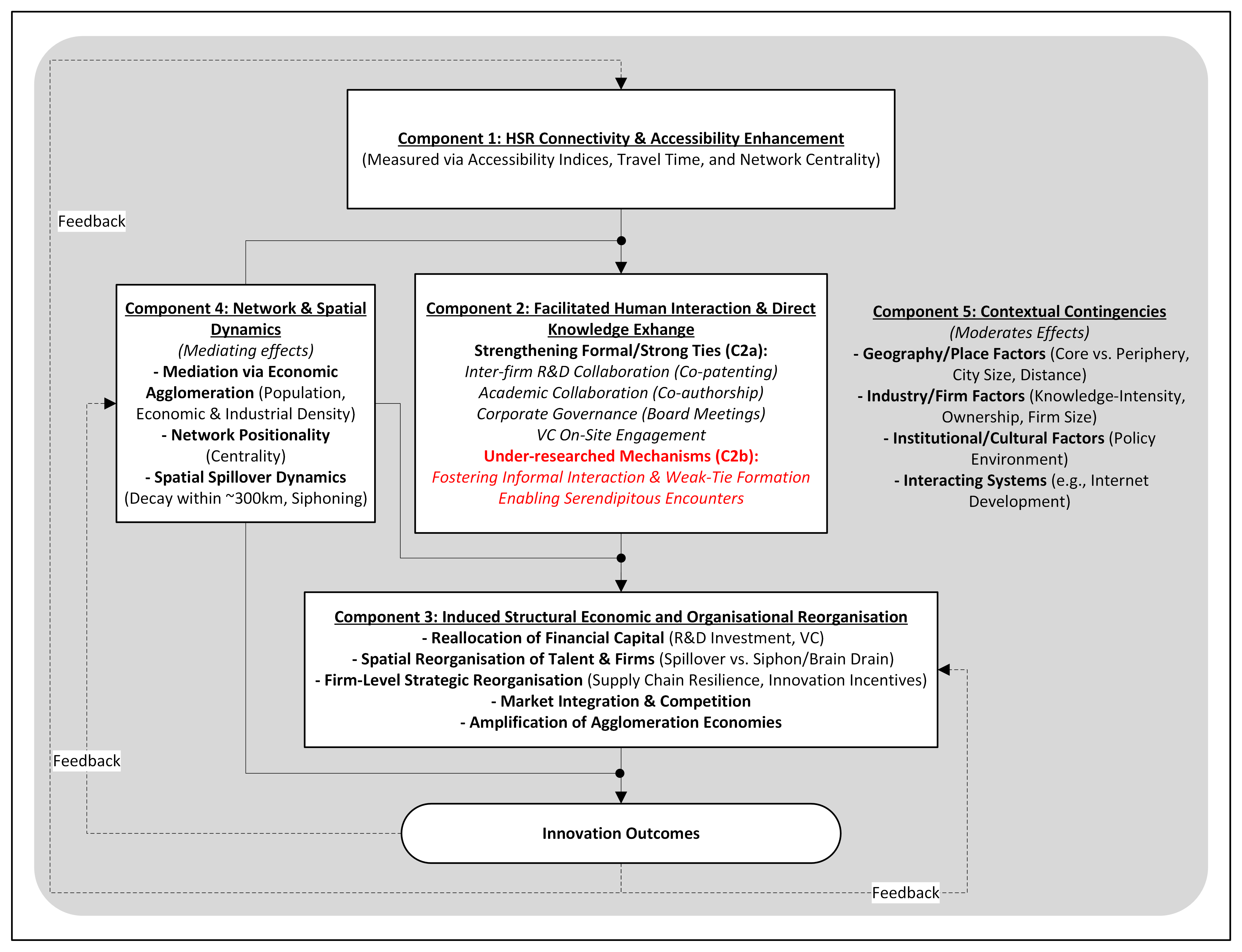
Moving beyond static density metrics, this project employs a novel Integrated Framework of Mechanisms. We investigate how physical connectivity translates into human interaction and, ultimately, structural economic reorganisation.
This comparative study analyses corridors that connect diverse economic geographies. Each case study is led by local university experts in partnership with rail operators.
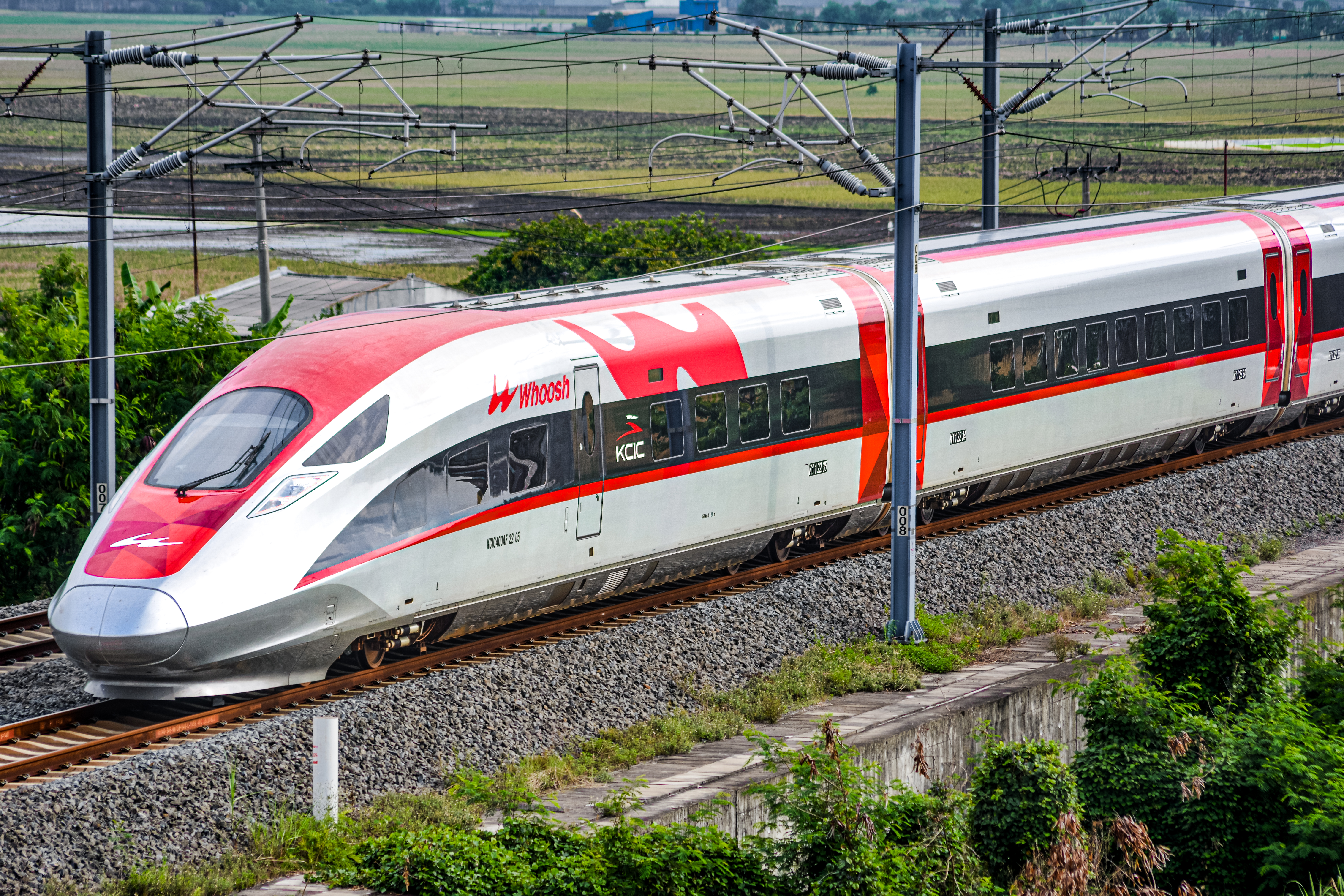


Southeast Asia's first high-speed railway, reducing travel time from 3 hours to 40 minutes. This line is a strategic pilot for the Belt and Road Initiative, designed to decongest Jakarta and stimulate new Transit-Oriented Development (TOD) in West Java.



A critical segment of the Mediterranean Corridor connecting Lombardy's industrial powerhouses. This high-frequency service acts as a 'metro' for the region, effectively merging the labor markets of Milan and Brescia into a single mega-region.
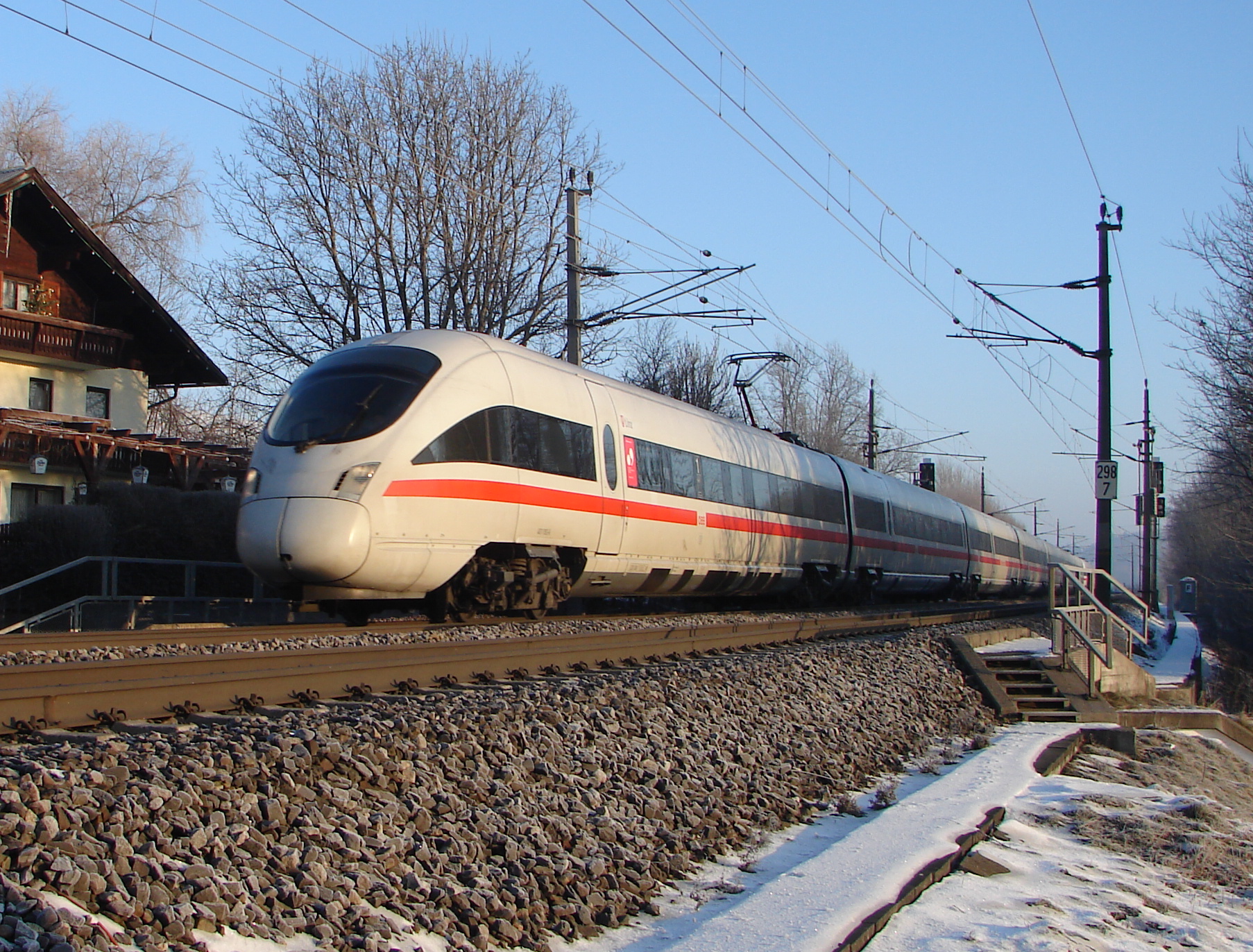


A transformational engineering project featuring the 33km Koralm Tunnel. By reducing travel time from 3 hours to 45 minutes, this line creates a new "Area of the South" economic zone, linking the university cities of Graz and Klagenfurt.
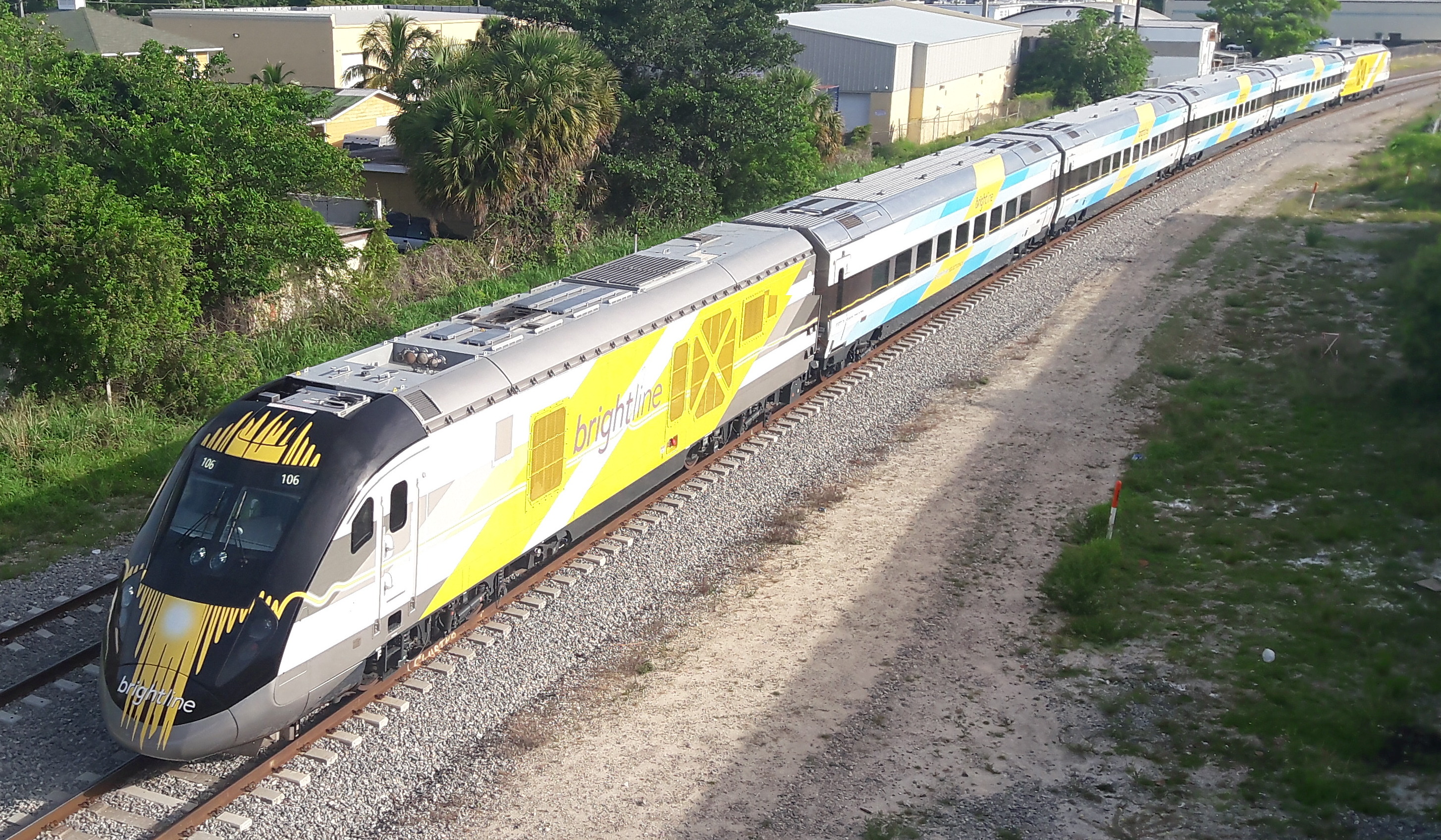


The first privately funded intercity passenger rail system in the US in over a century. Connecting Florida's tourism capital with its financial hub, this corridor tests the viability of private infrastructure in fostering regional innovation clusters.
To capture these elusive interactions, we employ a two-stage Context-Aware Hybrid Framework designed to engage time-poor "Innovation Workers".
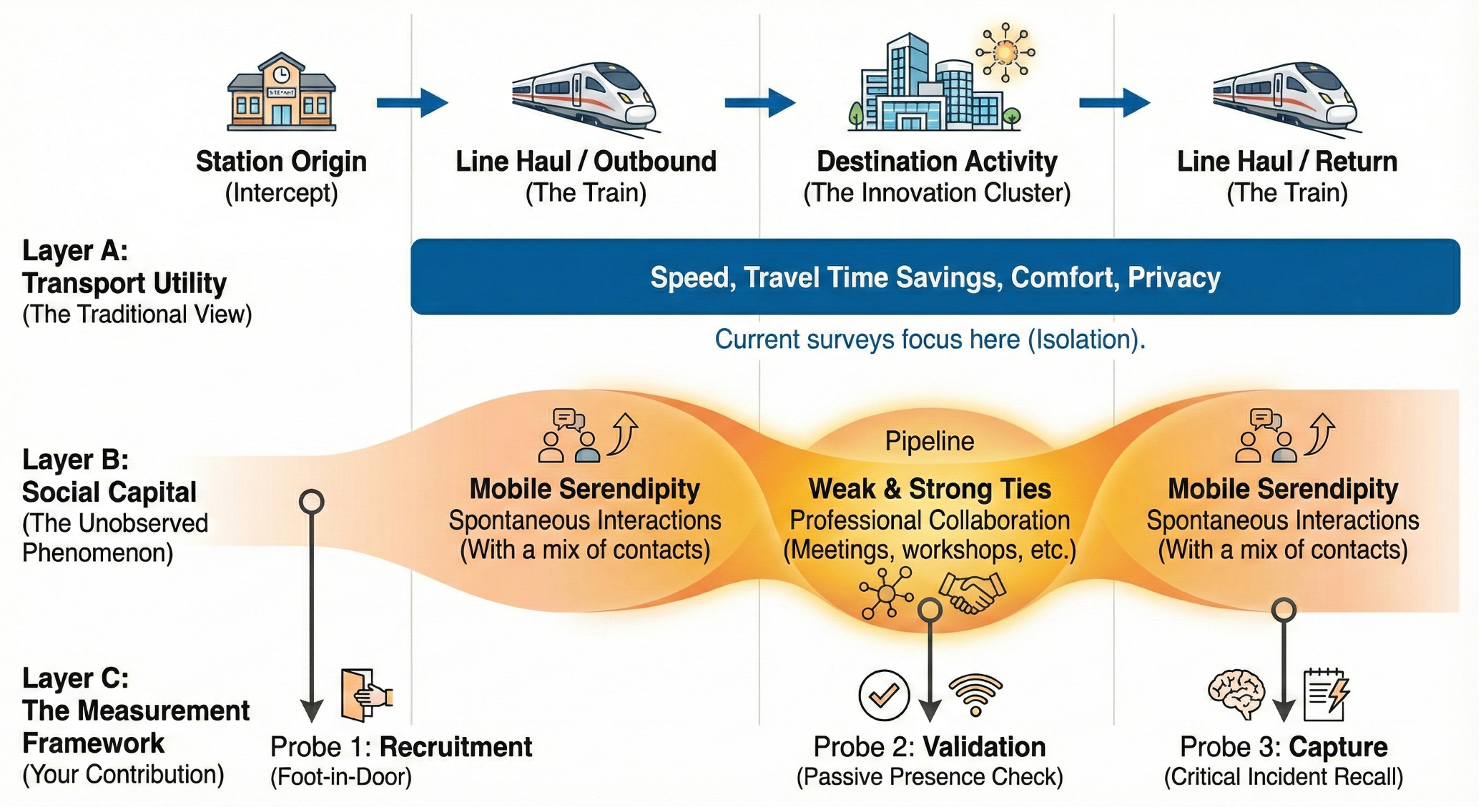
Participation in this study contributes directly to the future of transport policy and urban planning. The findings will assist in:
Participants in the survey will receive a personalised "Professional Benchmark Report" comparing their network diversity and travel habits to industry peers.
This project is an international collaboration involving leading transport and economic geography institutes:
Nicholas Hurley
PhD Researcher, Monash Institute of Transport Studies
Monash University, Australia
 https://orcid.org/0009-0007-3598-4619
This research (Project ID: 48258) is conducted in accordance with Monash University ethics guidelines.
Contact Research TeamAlready a participant and lost your link? Email us for a replacement.